
'Calendar year 2023 is going to be big as pessimism takes a back seat.'

India on Monday sought comprehensive reform of international financial institutions to enable enhanced capital flows and infrastructure investment in developing markets, which it said will strengthen recovery from the worst global economic crisis since 1945.
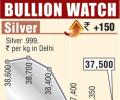
The yellow metal has lost Rs 390 in last three days.

India should be satisfied with the outcome of the recently concluded G20 summit in Toronto since its argument against a quick withdrawal of stimulus measures by developed nations had, to an extent, been accepted, according to US economic experts.

S&P Global Ratings on Monday cut India's economic growth forecast for current fiscal year to 7 per cent, but said the domestic demand-led economy will be less impacted by the global slowdown. S&P had in September projected the Indian economy to grow 7.3 per cent in 2022-23 and 6.5 per cent in next fiscal year (2023-24). "The global slowdown will have less impact on domestic demand-led economies such as India... India's output will expand 7 per cent in fiscal year 2022-2023 and 6 per cent in next fiscal year," S&P Global Ratings Asia-Pacific chief economist Louis Kuijs said.

Bajaj Finance was the top gainer in the Sensex pack, soaring over 8 per cent, followed by Kotak Bank, IndusInd Bank, HDFC, PowerGrid, Axis Bank, ICICI Bank and L&T. On the other hand, Maruti, ITC, NTPC and Nestle India were among the laggards.

Finance Minister Nirmala Sitharaman on Tuesday met IMF managing director Kristalina Georgieva and discussed a range of issues, including impact of geopolitical situation on global growth.

State Bank of India was the biggest loser in the Sensex pack, shedding 1.69 per cent, followed by Asian Paints, Kotak Mahindra Bank, HCL Technologies, Reliance Industries, Wipro, IndusInd Bank, Infosys, Power Grid and HDFC twins. In contrast, Nestle, Maruti, Bharti Airtel, Tata Motors, ITC and Hindustan Unilever were among the gainers.
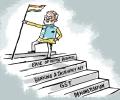
As the Ukraine conflict impacts the global GDP, India is projected to grow by 6.4 per cent in 2022, slower than the last year's 8.8 per cent but still the fastest-growing major economy, with higher inflationary pressures and uneven recovery of the labour market curbing private consumption and investment, according to a UN report. The UN Department of Economic and Social Affairs said in its World Economic Situation and Prospects (WESP) report released on Wednesday that the war in Ukraine has upended the fragile economic recovery from the pandemic, triggering a devastating humanitarian crisis in Europe, increasing food and commodity prices and globally exacerbating inflationary pressures. The global economy is now projected to grow by only 3.1 per cent in 2022, down from the 4.0 per cent growth forecast released in January 2022.

Gold advanced one per cent to $1,212.21 an ounce in Singapore.

'We have a plan to plough back a 'This year in the first half we had profits of more than Rs 31,000 crore.' significant amount of profits this financial year.' 'We have seen this organic plough back of profit is one of best ways to support the equity of the bank.'

The United Nations, its top leaders and agencies have expressed horror and strong condemnation over the killing of hundreds of civilians in a strike on a hospital in Gaza, underscoring that attack on hospitals or civilian infrastructure is against international humanitarian law and called for holding those responsible to account.

Upbeat high-frequency indicators and consumer confidence show that Indian economy continues to forge ahead, emerging out of shackles of pandemic, said an article on the state of economy published in RBI Bulletin on Wednesday. The recovery is spearheaded by an uptick in private investment through November-December alongside a turnaround in bank credit offtake and high capex from the government sector (Centre and states). In conjunction, the employment situation has brightened, said the article written by RBI officials.

Indian economy is poised to do better on the back of reforms undertaken by the government and is expected to clock a 6.5-7 per cent growth in the remaining part of the decade, Chief Economic Advisor (CEA) V Anantha Nageswaran said on Tuesday. Addressing reporters here after the tabling of the Economic Survey in Parliament by Finance Minister Nirmala Sitharaman, Nageswaran said that by and large, inflation is likely to be "well behaved" in FY2023-24 barring headwinds. "My optimism is that in the coming decade, rest of the decade, the potential GDP growth, without taking into account export potential, because global economy is still rife with uncertainty, the growth rate would be around 6.5 to 7 per cent, rather than between 6 per cent and 6.5 per cent," he said.
15 stock markets globally will hit a record high level by end-2012.

The Sensex ended over 51 points lower on Monday while the Nifty settled flat amid a weak trend in global markets and continuous foreign fund outflows. Markets are awaiting the November inflation data to be announced later in the day, traders said. The 30-share BSE Sensex declined 51.10 points or 0.08 per cent to settle at 62,130.57. During the day, it tumbled 505.52 points or 0.81 per cent to 61,676.15. The broader NSE Nifty ended at 18,497.15, marginally higher by 0.55 points.

Fitch Ratings on Tuesday retained India's economic growth forecast at 7 per cent for the current fiscal, but cut projections for the next two financial years saying the country is not impervious to global developments. In its December edition of the Global Economic Outlook, Fitch projected India's GDP to grow at 7 per cent in the current fiscal, at a slower rate of 6.2 per cent in 2023-24 and at 6.9 per cent in 2024-25. In September, Fitch projected 7 per cent growth for the current fiscal, followed by 6.7 per cent in 2023-24 and 7.1 per cent growth in 2024-25.

The Nifty ended at 4,605 -- up 148 points. Earlier in the day, the index opened at 4,459 and touched a high of 4,614. The market breadth was extremely positive. Out of 2,794 stocks traded 2,215 advanced while only 517 declined.

'It is less dependent on imported capital.'

Traders said emergence of buying at prevailing lower levels by jewellers and retailers ahead of the festive and wedding season, a firm global trend mainly led the recovery in precious metals.
The ILO said that the world needed 90 million new jobs between 2009 and 2010 in order to absorb new entrants to the labour market and avoid increasing the level of unemployment. Some 200 million people were jobless in 2008, the labour body said. This is up from 179 million in 2007 recorded in a January ILO report 'Global Employment Trends 2009'.

Investors became richer by over Rs 2.27 lakh crore on Monday as equities rebounded, with the BSE Sensex rallying over 1 per cent amid continuous foreign fund inflows and upbeat global markets. The 30-share BSE Sensex jumped 709.96 points or 1.16 per cent to settle at 61,764.25. During the day, it zoomed 799.9 points or 1.31 per cent to 61,854.19. Following the rally, the market capitalisation of BSE-listed firms jumped by Rs 2,27,794.46 crore to Rs 2,76,06,443.06 crore.

India will encourage greater investments in Sri Lanka's economy, especially in areas of energy, tourism and infrastructure, External Affairs Minister S Jaishankar said on Friday, as he expressed India's solidarity with the debt-ridden Island nation during its "difficult moments".

Officials from State-run refiners contend that savings from purchase of Russian oil are used to offset a part of the losses in revenues from selling transport fuels and LPG at State-set rates.

India's real GDP growth is set to exceed 7 per cent for CY-2015.

When the armoured vehicles arrive in this 'kill zone', each PALM 400 picks out its target and fires an armour-penetrating projectile, penetrating it from the top where its armour protection is the least.
Meanwhile, an ADB report presented at the seminar said this year could prove crucial for the global economy as financial tensions in Europe could escalate further and there remains concern over fledgling economic recovery in the US.
In the next 12 months, most sectors are likely to suffer.

After dipping by as much as 17 per cent in April, readymade garment (RMG) exports of all textile categories in India are showing signs of recovery in May. Exporters in Tiruppur are indicating a rise in rupee terms during the month, while it may take at least a month for volumes to be back in positive terrain. Among the global majors that are placing orders in the textile hub include Walmart, H&M (Hennes & Mauritz AB), Tommy Hilfiger and Target.

These stocks offer the best combination of maximum 'buy' recommendations from brokerages and share price upside over the next 12 months.

Gold prices rose by Rs 190 to Rs 27,190 per 10 grams at the bullion market on Friday.

Gold prices recovered by Rs 100 to trade at Rs 27,200 per 10 gm at the bullion market.

'Favourable product mix, sales recovery, and cost saving initiatives are expected to support margins going ahead while focus on debt reduction (target of debt free by FY24) will aid balance sheet strength'

The markets may be entering a consolidation phase and are expected to trade sideways for now after a good run in the last few weeks, suggest analysts. In this backdrop, they suggest investors can book profits at the current levels and enter the market again on a decline from a medium-to-long term perspective. Thus far in fiscal 2023-24 (FY24), the S&P BSE Sensex has moved up around 5 per cent to nearly 62,000 levels.

Heavyweights in financial and It space lead the upmove in noon trades.
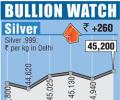
Gold in New York, which normally sets price trend on the domestic front, traded marginally up 0.07 per cent to $1,291.80 an ounce.

Growth has slowed in some of the large emerging economies, its interim economic assessment report added. "One factor has been a rise in global bond yields -- triggered in part by an expected scaling back of the US Federal Reserve's quantitative easing -- which has fuelled market instability and capital outflows in a number of major emerging economies, such as India and Indonesia.

IT shares lost ground tracking a sell-off in tech stocks on Nasdaq on Friday

'Markets could face uncertainty in the short to medium term.' 'It would be prudent to invest in alternative asset classes, especially debt, for about a year.' 'Bank fixed deposits are offering rates as high as 9 per cent per annum and these can be used as a great hedging tool until equity markets stabilise.'

The target was for banks to sell Rs 2 trillion worth of non-performing assets to NARCL, the so-called 'bad bank, by 2021-2022. Only 10 per cent of this has been executed.
